About Philip

Meet the Boston trial lawyer turning real investigations into relentless, character-driven legal thrillers.
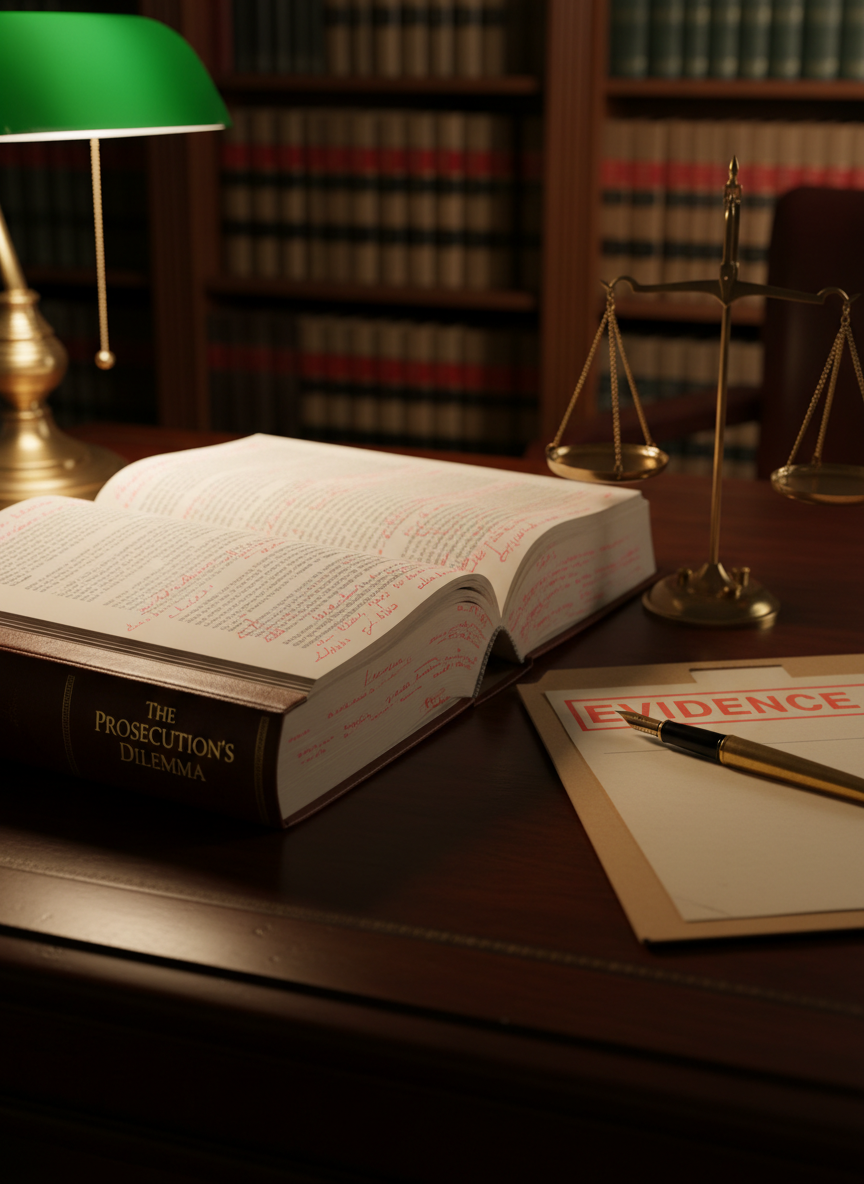
A heavy, leather-bound legal thriller manuscript resting open on a dark mahogany desk, its cream-colored pages filled with dense, neatly typed text and red-ink annotations in the margins. Beside it lies a vintage brass fountain pen, a worn case file folder stamped “EVIDENCE,” and a small brass scale of justice. The scene is set in a quiet, wood-paneled Boston law office at night, illuminated by the warm, focused glow of a green-shaded banker’s lamp that creates dramatic highlights and deep shadows. Shot at eye level with a shallow depth of field, the manuscript spine and title are in razor-sharp focus while the background of blurred law books fades softly, evoking a tense, professional, photographic realism.
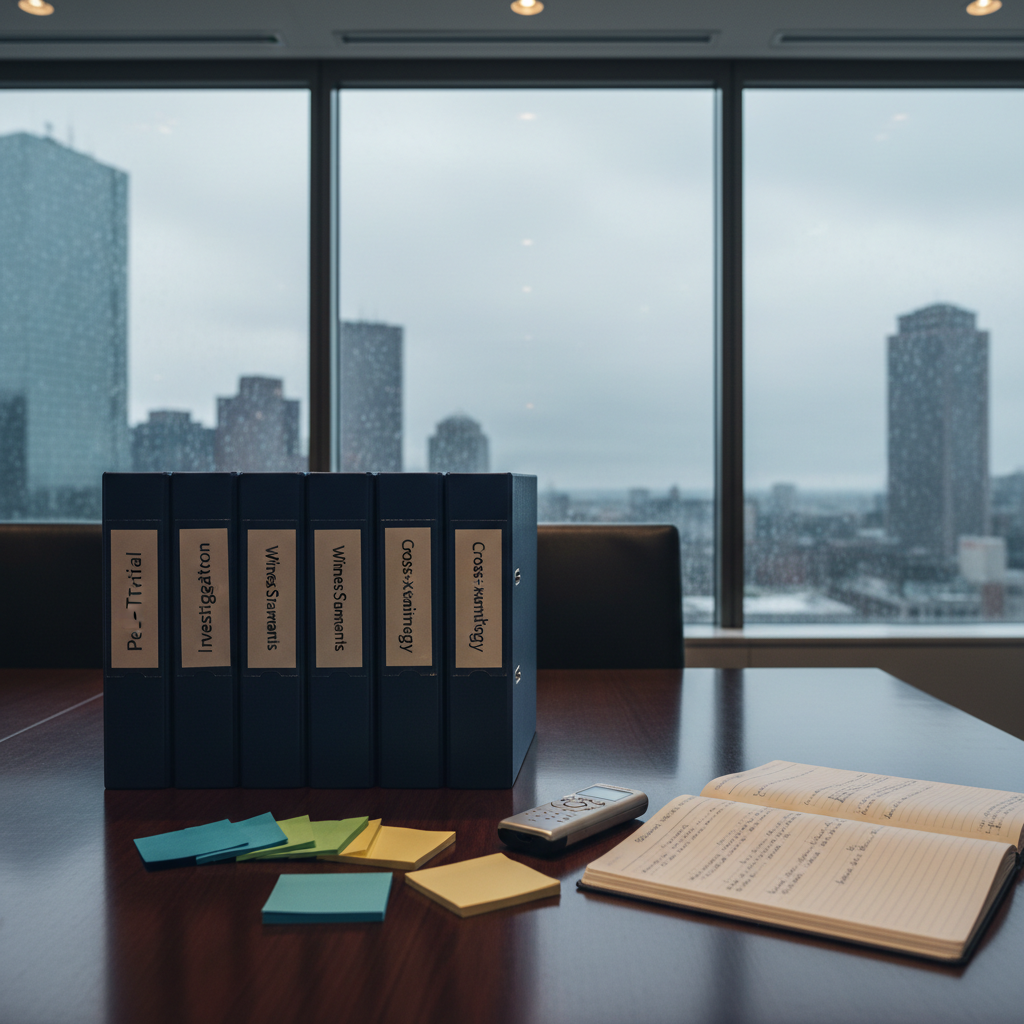
An orderly arrangement of thick, navy-blue trial binders, each labeled with white spine tags reading “Pre-Trial Investigation,” “Witness Statements,” and “Cross-Examination Strategy,” standing in a precise row on a polished conference table. A spread of color-coded sticky notes, a silver digital recorder, and a legal pad filled with meticulous handwritten trial questions fan out in the foreground. Floor-to-ceiling windows reveal a blurred, rainy Boston skyline beyond. Cool overcast daylight filters through the glass, balanced by subtle recessed ceiling lights, creating soft reflections on the table’s surface. Captured from a slightly elevated angle with photographic realism, the composition uses the rule of thirds to emphasize the binders, conveying a mood of disciplined preparation and quiet intensity.

From Courtroom Battles to Thrillers

Philip J. Puglisi spent decades in Boston courtrooms, investigating claims and trying high-stakes cases. Now he channels that insider experience into gripping legal thrillers. Follow the evidence, corruption, and power struggles in his novels on the Books page.

About

From Claims Files to Courtrooms

Philip began as an insurance adjuster, learning how claims are built and broken. As a licensed private investigator, he chased missing witnesses. Years later, as a Boston litigator, he fused those skills into meticulous pre-trial strategy—and now, authentic fiction.

A heavy, leather-bound legal thriller manuscript resting open on a dark mahogany desk, its cream-colored pages filled with dense, neatly typed text and red-ink annotations in the margins. Beside it lies a vintage brass fountain pen, a worn case file folder stamped “EVIDENCE,” and a small brass scale of justice. The scene is set in a quiet, wood-paneled Boston law office at night, illuminated by the warm, focused glow of a green-shaded banker’s lamp that creates dramatic highlights and deep shadows. Shot at eye level with a shallow depth of field, the manuscript spine and title are in razor-sharp focus while the background of blurred law books fades softly, evoking a tense, professional, photographic realism.
An orderly arrangement of thick, navy-blue trial binders, each labeled with white spine tags reading “Pre-Trial Investigation,” “Witness Statements,” and “Cross-Examination Strategy,” standing in a precise row on a polished conference table. A spread of color-coded sticky notes, a silver digital recorder, and a legal pad filled with meticulous handwritten trial questions fan out in the foreground. Floor-to-ceiling windows reveal a blurred, rainy Boston skyline beyond. Cool overcast daylight filters through the glass, balanced by subtle recessed ceiling lights, creating soft reflections on the table’s surface. Captured from a slightly elevated angle with photographic realism, the composition uses the rule of thirds to emphasize the binders, conveying a mood of disciplined preparation and quiet intensity.
A heavy, leather-bound legal thriller manuscript resting open on a dark mahogany desk, its cream-colored pages filled with dense, neatly typed text and red-ink annotations in the margins. Beside it lies a vintage brass fountain pen, a worn case file folder stamped “EVIDENCE,” and a small brass scale of justice. The scene is set in a quiet, wood-paneled Boston law office at night, illuminated by the warm, focused glow of a green-shaded banker’s lamp that creates dramatic highlights and deep shadows. Shot at eye level with a shallow depth of field, the manuscript spine and title are in razor-sharp focus while the background of blurred law books fades softly, evoking a tense, professional, photographic realism.
An orderly arrangement of thick, navy-blue trial binders, each labeled with white spine tags reading “Pre-Trial Investigation,” “Witness Statements,” and “Cross-Examination Strategy,” standing in a precise row on a polished conference table. A spread of color-coded sticky notes, a silver digital recorder, and a legal pad filled with meticulous handwritten trial questions fan out in the foreground. Floor-to-ceiling windows reveal a blurred, rainy Boston skyline beyond. Cool overcast daylight filters through the glass, balanced by subtle recessed ceiling lights, creating soft reflections on the table’s surface. Captured from a slightly elevated angle with photographic realism, the composition uses the rule of thirds to emphasize the binders, conveying a mood of disciplined preparation and quiet intensity.